
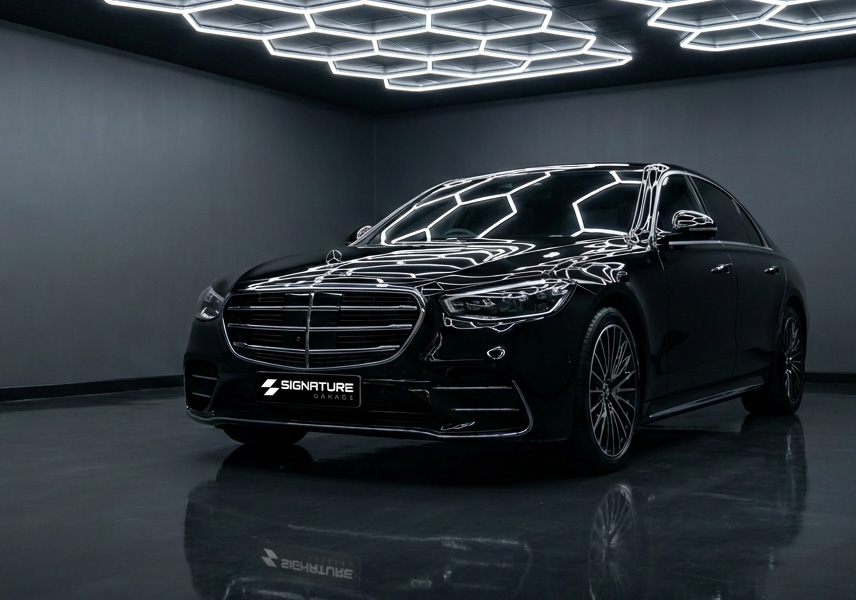
If your priority is impact resistance against stone chips, scratches, and parking scrapes, you need Paint Protection Film (PPF). It provides a physical barrier thick enough to absorb hits from road debris.
If your priority is aesthetic gloss, ease of cleaning, and protection against environmental stains (like bird droppings or UV fading), you need Ceramic Coating. It acts as a chemical shield but offers zero protection against rock chips.
For complete coverage, Signature Garage recommends a "hybrid" approach: PPF on the front (bonnet, bumper, mirrors) to stop stones, and Ceramic Coating on the rest for easy washing and shine.
Protecting Your Investment on Australian Roads
Buying a vehicle is likely the second biggest purchase you will make after your home. Whether you have just driven a new 4x4 off the showroom floor or trusted Signature Garage to restore a classic muscle car, the paintwork looks flawless right now. The challenge is keeping it that way.
The Australian climate is unforgiving. High UV levels, salty coastal air in Melbourne, and gravel-heavy country roads all work together to degrade your vehicle’s finish. Two solutions dominate the protection market: Paint Protection Film (PPF) and Ceramic Coating.
Many drivers use these terms interchangeably, but they are distinct products with different functions. Understanding the mechanics of each will help you make a decision that matches your budget and driving lifestyle.
What is Paint Protection Film (PPF)?
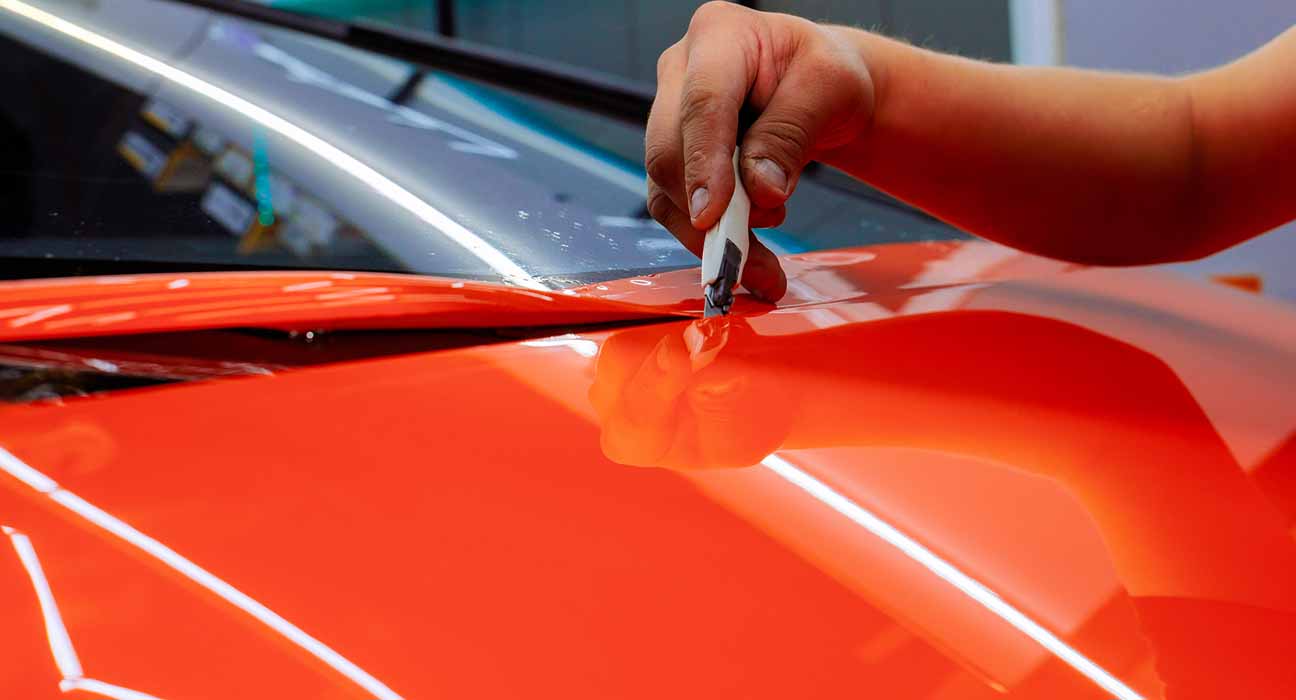
Paint Protection Film, often called "clear bra," is a transparent, thermoplastic urethane film. A professional installer applies this film over the painted surfaces of your car.
Think of PPF as a physical shield. It is significantly thicker than any wax or coating. The primary function of PPF is impact absorption. When a stone flies up from the road and hits a panel protected by PPF, the film absorbs the energy and disperses it, preventing the paint underneath from chipping.
Key Attributes of PPF:
Self-Healing Properties: High-quality PPF features an elastomeric top coat. If you get fine swirl marks or light scratches on the film, exposing it to heat (sunlight or warm water) causes the polymer to rearrange and "heal" itself, making the scratches vanish.
Impact Resistance: This is the only product that stops rock chips, deep scratches from bush pinstriping, and minor abrasions from shopping trolleys.
invisibility: Modern films are optically clear. When wrapped correctly around edges (like inside the bonnet or door jams), the film is virtually undetectable.
What is Ceramic Coating?
Ceramic Coating is a liquid polymer solution containing silica dioxide (SiO2). When applied to your car’s paint, it bonds chemically with the clear coat, creating a semi-permanent layer.
Think of Ceramic Coating as a "sacrificial skin" that is harder than your factory clear coat. Its main job is chemical resistance and hydrophobicity (water repulsion). It fills in the microscopic pores of your paint, creating a surface so smooth that dirt and water cannot stick to it.
Key Attributes of Ceramic Coating:
Extreme Gloss: It enhances the depth and clarity of your paint, giving it a permanent "wet look."
Hydrophobic Nature: Water beads up and rolls off instantly. This makes washing your car incredibly fast, as grime rinses away with minimal effort.
Chemical Defence: It stops acidic contaminants like bird lime, bug splatter, and tree sap from etching into the clear coat. It also contains UV inhibitors to prevent oxidation (fading) from the harsh Australian sun.
The Core Differences: Impact vs. Maintenance
The decision often comes down to what you are trying to stop.
Scenario A: The Highway Commuter If you drive on the Monash Freeway or head out on regional roads often, your car is constantly bombarded by debris. A Ceramic Coating will not help here. A rock hitting a ceramic-coated bumper will still chip the paint.
Verdict: You need PPF, at least on the "high impact" zones (front bumper, bonnet, headlights, and mirrors).
Scenario B: The City Driver If your car lives in South Melbourne, parks in a garage, and rarely sees gravel, your main enemies are UV rays, rain spots, and bird droppings. You likely want your car to look showroom-ready with minimal effort.
Verdict: Ceramic Coating is the ideal choice. It keeps the car cleaner for longer and requires less scrubbing during a wash.
The Preparation Factor: Paint Correction
Regardless of which option you choose, the condition of the paint underneath is vital. Both PPF and Ceramic Coating are transparent. They do not hide defects; they lock them in.
At Signature Garage, we often see vehicles—even brand new ones—with swirl marks from dealership car washes. Before we apply any protection:
Decontamination: We remove iron particles and road tar embedded in the clear coat.
Paint Correction: We use machine polishers to level the surface, removing scratches and swirls.
If you apply Ceramic Coating over a scratched surface, you seal those scratches in for the life of the coating. If you apply PPF over a stone chip that has started to rust, the rust will continue to spread underneath the film. This is why a professional body shop assessment is necessary before application.
Can You Use Both? (The Hybrid Method)
This is the gold standard for car enthusiasts. You do not have to choose one or the other.
A common package at Signature Garage involves applying PPF to the front end of the car. This protects the leading edges from stone chips. Then, we apply Ceramic Coating over the entire vehicle, including on top of the PPF.
This gives you the best of both worlds:
The front is armoured against physical impact.
The whole car is glossy and easy to clean.
The coating actually protects the PPF itself, preventing the film from staining or yellowing over time.
Longevity and Warranty
These products are not permanent, but they are long-term investments.
PPF Lifespan: A high-quality film typically lasts between 5 and 10 years. Over time, it may pick up enough battle scars that you choose to replace it, but your factory paint underneath remains pristine. When you peel off the film 5 years later, the paint looks exactly as it did on day one. This massively helps resale value.
Ceramic Coating Lifespan: Depending on the grade (consumer vs. professional) and how many layers are applied, coatings last anywhere from 2 to 5 years. They eventually wear down from abrasion (washing) and exposure to elements.
Common Misconceptions
There is a lot of noise in the automotive industry. Let's clear up a few myths.
Myth: "Ceramic Coating is scratch-proof."
Fact: It is scratch-resistant to very fine marks, but it will not stop a key scratch or a rock chip.
Myth: "I don't need to wash my car if I get a coating."
Fact: You still must wash your car. The benefit is that the wash is faster, and you never need to wax the car again.
Myth: "PPF will turn yellow."
Fact: Old technology (PVC films) from 10 years ago turned yellow. Modern TPU films are UV stable and do not yellow if maintained correctly.
Why Professional Installation Matters
You might see DIY kits online for a fraction of the price. Be warned: these are high-risk jobs.
Ceramic Coating Risks: If a coating is not applied evenly or is left to dry too long, it creates "high spots"—dark, oily streaks that harden like glass. Removing them often requires wet-sanding the factory clear coat, which is invasive and risky.
PPF Risks: Stretching a 2D film over a 3D bumper requires immense skill. Inexperienced installers often leave stretch marks, lift lines, or entrap dust bubbles. worse, poor cutting techniques can result in razor blades slicing into your actual paintwork.
At Signature Garage, our technicians understand the nuances of vehicle bodywork. We ensure the paint is chemically pure before application and that the environment is dust-free.
Making the Right Choice for Your Vehicle
Your car represents your style and standards. Protecting it ensures it continues to turn heads years down the track.
If you are still unsure which path to take, bring your vehicle to Signature Garage at 61 Buckhurst St, South Melbourne. We can inspect your current paint condition and discuss how you use the car. Whether you need the heavy-duty armour of PPF for country touring or the glass-like slickness of a Ceramic Coating for city living, we have the tools and expertise to deliver the result you need.
The Signature Garage Difference: A Commitment to Longevity
At Signature Garage, we don't just sell car wraps; we provide a complete, long-term solution for transforming and protecting your vehicle. Our entire process is built around ensuring maximum durability and client satisfaction.
We Use Only Premium Materials: We have standing partnerships with the world's best vinyl manufacturers. We wouldn't put a film on your car that we wouldn't be proud to have on our own.
Our Installers are Certified Experts: Our team undergoes rigorous training and certification. We understand the science behind the materials and apply meticulous, industry-best practices to every installation. Our climate-controlled, dust-free bay provides the perfect environment for a flawless application.
We Educate Our Clients: When you collect your newly wrapped vehicle, our job isn't done. We walk you through the proper maintenance procedures, recommend the best care products, and answer any questions you have. We want you to be empowered to protect your investment.
We Stand Behind Our Work: We provide a comprehensive warranty on both the film and our workmanship. This gives you the peace of mind that you're covered against material defects and installation errors.
Choosing Signature Garage means choosing a partner dedicated to quality. We understand the Melbourne environment and select the right materials and techniques to stand up to it. When you're ready to make a statement with your vehicle, trust the team that prioritises a finish that not only looks incredible on day one but continues to impress for years to come.
Your car deserves a signature look that lasts. Contact us today to discuss your vision and learn how a premium vinyl wrap can transform your ride.