
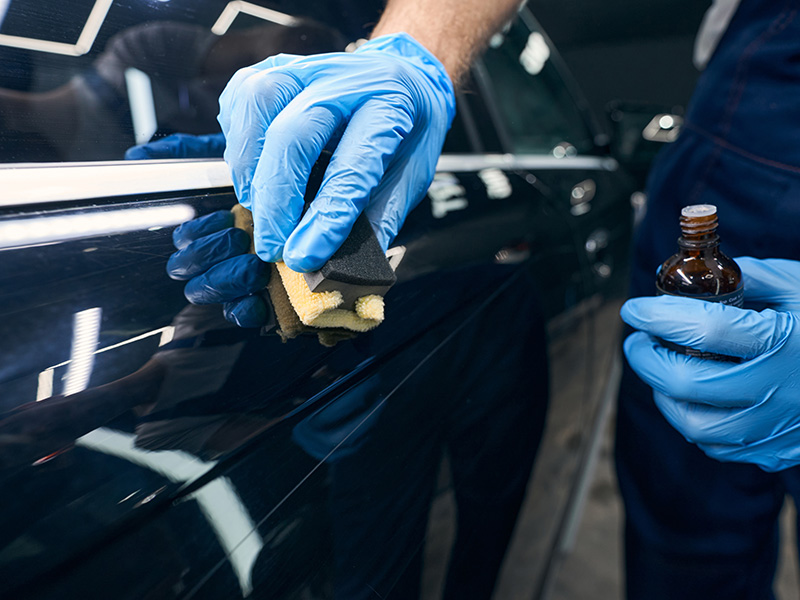
If you want to stop physical damage like stone chips, scratches from bush rubbing, and parking dings, you need Paint Protection Film (PPF). It is a thick, self-healing urethane layer that acts as armour for your paint.
If your main goal is ease of cleaning, intense gloss, and protection against chemical stains (like bird droppings or UV fading), you need Ceramic Coating. It does not stop rock chips, but it keeps the car looking freshly washed for longer.
For the best of both worlds, many Signature Garage customers in South Melbourne choose a combination: PPF on the front impact zones (bumper, bonnet, mirrors) and Ceramic Coating on the rest of the vehicle.
Buying a new car or restoring a classic at our shop is a big financial move. Once the bodywork is pristine, keeping it that way requires a plan. The Australian environment is harsh. Between the intense UV index, salty coastal air, and loose gravel on back roads, your paintwork faces a daily assault.
Two main options dominate the market: Paint Protection Film (PPF) and Ceramic Coating. Both promise to keep your vehicle looking sharp, but they function differently. Making the right choice depends on how you use your vehicle, your budget, and your expectations.
Here is a breakdown of what you should ask yourself before booking your service.
Understanding the Technology
Before you decide, you must know what you are paying for.
Paint Protection Film (PPF) is a transparent, thermoplastic urethane film applied directly over your car’s clear coat. Think of it as a heavy-duty screen protector for your vehicle. It has a self-healing top layer, meaning fine scratches often disappear with heat from the sun or a warm engine. It is physically measurable in thickness and provides a genuine barrier against impact.
Ceramic Coating is a liquid polymer solution. When applied by a professional, it bonds chemically with the vehicle’s factory paint. It creates a semi-permanent hydrophobic (water-repelling) layer. This makes water bead up and roll off, taking dirt with it. It hardens the surface slightly but does not add significant cushion against impact.
Question 1: What is My Primary "Enemy"?
This is the biggest factor in your decision. You need to identify what damages your car most often.
Choose PPF if: Your daily drive involves highways or country roads. In Australia, stone chips are the number one killer of front-end paint. If you drive a ute on worksites or do a lot of freeway kilometres, rocks flicked up by trucks will chip your paint. Ceramic coating cannot stop a rock travelling at 100km/h. Only the physical thickness of PPF can absorb that impact.
Choose Ceramic Coating if: Your car stays mostly in the city or suburbs, and you hate washing it. If your main frustration is road grime, water spots, bird droppings, or tree sap etching into the paint, coating is the answer. The chemical resistance prevents these contaminants from bonding to the surface. It makes the wash process much faster and less frequent.
Question 2: How Long Will I Keep the Car?
The lifespan of these products varies, affecting the value proposition.
High-quality PPF usually comes with a warranty ranging from 5 to 10 years. It resists yellowing and peeling if maintained well. If you plan to keep the car for a long cycle, or if it is a "forever car" (like a classic restoration project), PPF preserves the original factory paint underneath perfectly. When you eventually peel it off, the paint looks exactly as it did on day one, which helps resale value.
Ceramic Coatings last anywhere from 2 to 5 years depending on the grade (consumer vs. professional) and maintenance. It eventually wears off and needs re-application. If you lease your vehicle or change cars every three years, a coating offers excellent aesthetic returns without the higher upfront investment of full-body PPF.
Question 3: What is My Budget?
Costs differ significantly between the two.
PPF is labour-intensive and material-heavy. Applying film requires a highly skilled technician to stretch, fit, and tuck the material around complex curves without leaving stretch marks or bubbles. The material itself is expensive. A full-body wrap costs considerably more than a coating. However, many drivers opt for a "Front End Package" covering the bumper, bonnet, wings, and mirrors. This protects the high-impact areas while keeping costs managed.
Ceramic Coating is more affordable upfront. While it still requires meticulous preparation—specifically paint correction to remove swirl marks before application—the material cost is lower, and the application time is shorter than a full PPF wrap. For the price of wrapping just the front bumper in PPF, you might be able to coat the entire car.
Question 4: What is the Current Condition of the Paint?
This is a point often overlooked. Neither product hides bad paintwork. In fact, they can highlight defects.
If your car is older and has swirl marks, scratches, or oxidation, Signature Garage must perform paint correction first. We use machine polishers to level the clear coat and remove imperfections.
For Coating: The paint must be near-perfect. The coating acts like a magnifying glass. If you coat over a scratch, you seal that scratch in for years.
For PPF: While PPF can mask very minor hairline swirls due to its adhesive layer, significant defects must be fixed first. You do not want to trap rust or deep scratches under a permanent film.
If your car needs significant bodywork or painting (services we provide), we usually recommend waiting a specific period (often 30 to 90 days) for the new paint to "outgas" and fully cure before applying PPF or coating. Applying too early can trap solvents and cloud the finish.
Question 5: Can I Have Both?
Yes, and for many car enthusiasts, this is the gold standard.
You can apply PPF to the high-impact areas (Front bumper, bonnet, headlights, side mirrors) to stop stone chips. Then, apply Ceramic Coating over the top of the PPF and on the rest of the exposed paint.
This setup gives you the impact protection where you need it and the hydrophobic, glossy, easy-clean properties over the entire vehicle. The coating also helps keep the PPF clean, preventing insect acids from etching into the film itself.
The Maintenance Reality
A common myth is that these products mean you never have to wash your car again. That is false.
Maintaing Ceramic Coating: You still need to wash the vehicle. The benefit is that you won't need to wax or polish it. A simple two-bucket hand wash will bring back the shine immediately. You must use pH-neutral car shampoos. Aggressive truck-wash chemicals can strip the coating prematurely.
Maintaining PPF: You treat it much like normal paint, but you must be careful with high-pressure washers near the edges of panels. If you blast the edge of the film at close range, you might lift it. Using a spray sealant or a specific PPF-safe detailer spray helps keep the film slick and hydrated.
The Maintenance Reality
A common myth is that these products mean you never have to wash your car again. That is false.
Maintaing Ceramic Coating: You still need to wash the vehicle. The benefit is that you won't need to wax or polish it. A simple two-bucket hand wash will bring back the shine immediately. You must use pH-neutral car shampoos. Aggressive truck-wash chemicals can strip the coating prematurely.
Maintaining PPF: You treat it much like normal paint, but you must be careful with high-pressure washers near the edges of panels. If you blast the edge of the film at close range, you might lift it. Using a spray sealant or a specific PPF-safe detailer spray helps keep the film slick and hydrated.
Why Professional Application is Necessary
You might see DIY kits online for both products. We strongly advise against this for high-value vehicles.
Risks of DIY Ceramic Coating: "High spots" are the most common issue. If the coating is not levelled correctly before it flashes (dries), it leaves dark, oily-looking streaks that harden like rock. Removing them often requires wet sanding the paint, which removes clear coat.
Risks of DIY PPF: Dust contamination, stretch marks, lifting edges, and razor cuts on your paint are high risks. A professional installer uses plotter-cut patterns or knifeless tape to ensure no blade ever touches your car’s bodywork.
The Verdict for Signature Garage Customers
Your car is an asset. Whether you have just picked up a new Ranger from the dealer or we have just finished a full respray on your classic Holden, locking in that finish is smart.
Go with PPF if you want armour against the physical world. It is the only thing that stops stone chips.
Go with Ceramic Coating if you want permanent gloss and easy washing.
Go with Both if you want the ultimate defence package.
At Signature Garage in South Melbourne, we handle everything from the initial body repair and painting to the final protection stages. We know how soft or hard specific paint systems are, which allows us to tailor the prep work perfectly.
Stop by our shop at 61 Buckhurst St, South Melbourne. We can inspect your vehicle’s paint condition and give you an honest assessment of which protection package fits your driving lifestyle.
Secure your paintwork today
The Signature Garage Difference: A Commitment to Longevity
At Signature Garage, we don't just sell car wraps; we provide a complete, long-term solution for transforming and protecting your vehicle. Our entire process is built around ensuring maximum durability and client satisfaction.
We Use Only Premium Materials: We have standing partnerships with the world's best vinyl manufacturers. We wouldn't put a film on your car that we wouldn't be proud to have on our own.
Our Installers are Certified Experts: Our team undergoes rigorous training and certification. We understand the science behind the materials and apply meticulous, industry-best practices to every installation. Our climate-controlled, dust-free bay provides the perfect environment for a flawless application.
We Educate Our Clients: When you collect your newly wrapped vehicle, our job isn't done. We walk you through the proper maintenance procedures, recommend the best care products, and answer any questions you have. We want you to be empowered to protect your investment.
We Stand Behind Our Work: We provide a comprehensive warranty on both the film and our workmanship. This gives you the peace of mind that you're covered against material defects and installation errors.
Choosing Signature Garage means choosing a partner dedicated to quality. We understand the Melbourne environment and select the right materials and techniques to stand up to it. When you're ready to make a statement with your vehicle, trust the team that prioritises a finish that not only looks incredible on day one but continues to impress for years to come.
Your car deserves a signature look that lasts. Contact us today to discuss your vision and learn how a premium vinyl wrap can transform your ride.